Certus Golf / Stats
Know where your strokes go.


Every shot you log is scored against the level you’re chasing. Then the coach turns it into the few things worth working on.
Every shot you log is scored against the level you’re chasing. Then the coach turns it into the few things worth working on.
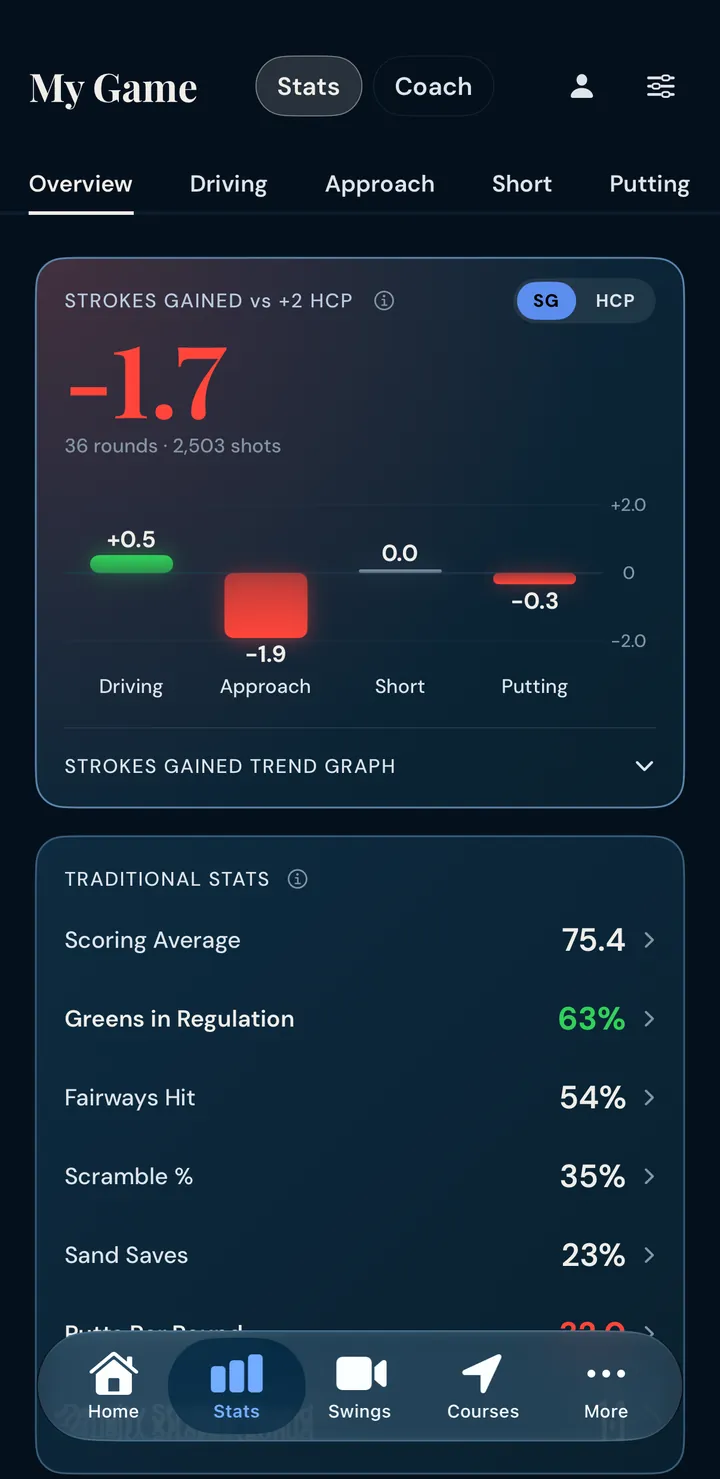
Strokes gained for driving, approach, short game and putting, side by side, adding up to one headline number. The trend graph is one tap away.
Flip the toggle from SG to HCP and the same numbers read as handicaps: you might drive like a 3 and putt like a 12. Below sit the traditional stats you know, each one tappable for the detail.
A 15-handicap losing four strokes to scratch learns nothing new. Certus lets you measure against any whole handicap from Tour to 20.
Each one opens with its strokes gained and biggest leak, then breaks down into the patterns that cause it.


Swipe for more →
Doubles, three-putts, par-5 bogeys, bogeys from inside 150 and double chips: the five score-wreckers, counted per round. Strokes gained finds the skill leaks, and this finds the discipline ones.
Every three-putt split into its cause: a bad lag, or a missed short one. Each one needs a different kind of practice.
Rate how focused you were, and once you’ve rated enough rounds Certus compares your scoring on focused holes with unfocused ones.
Lowest round and nine, most fairways, greens and birdies, fewest putts, and runs of pars or better, greens and fairways. Each one taps through to the round it came from.


Swipe for more →
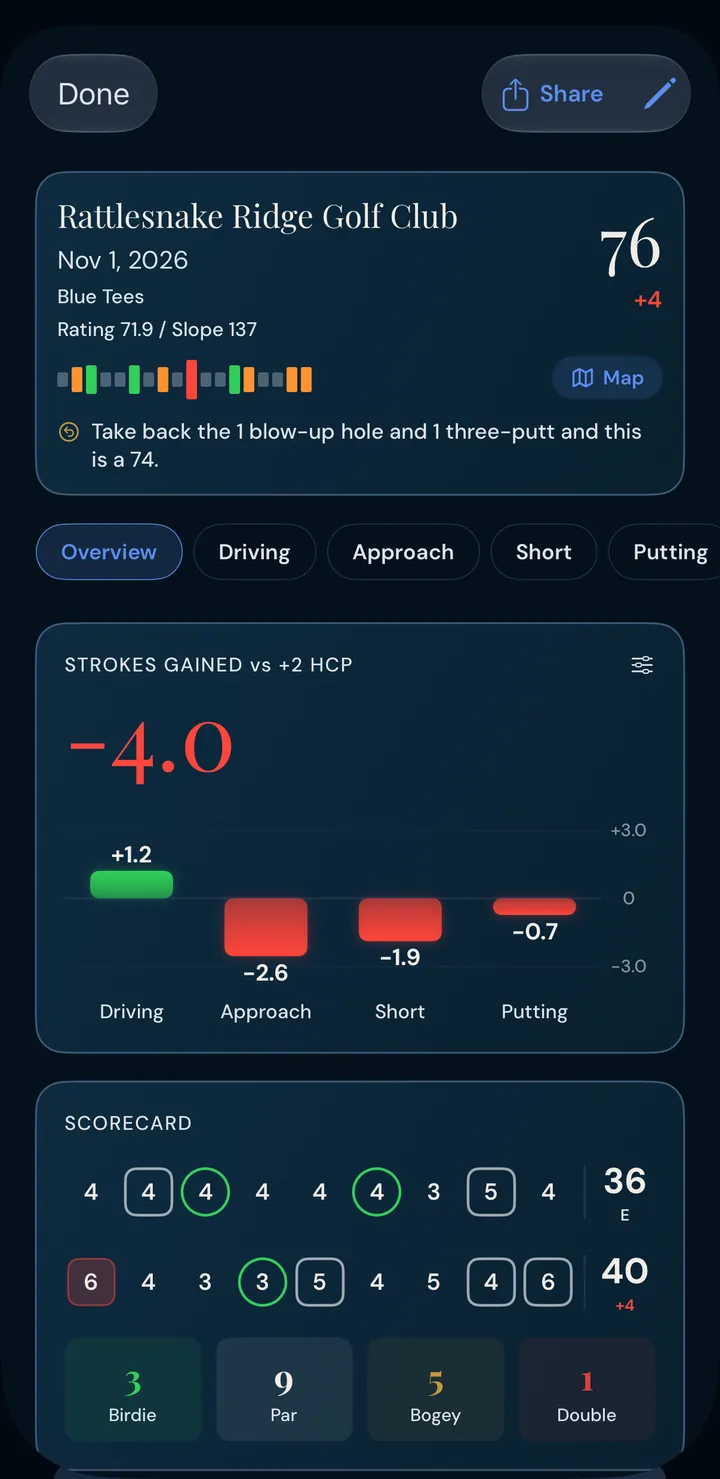
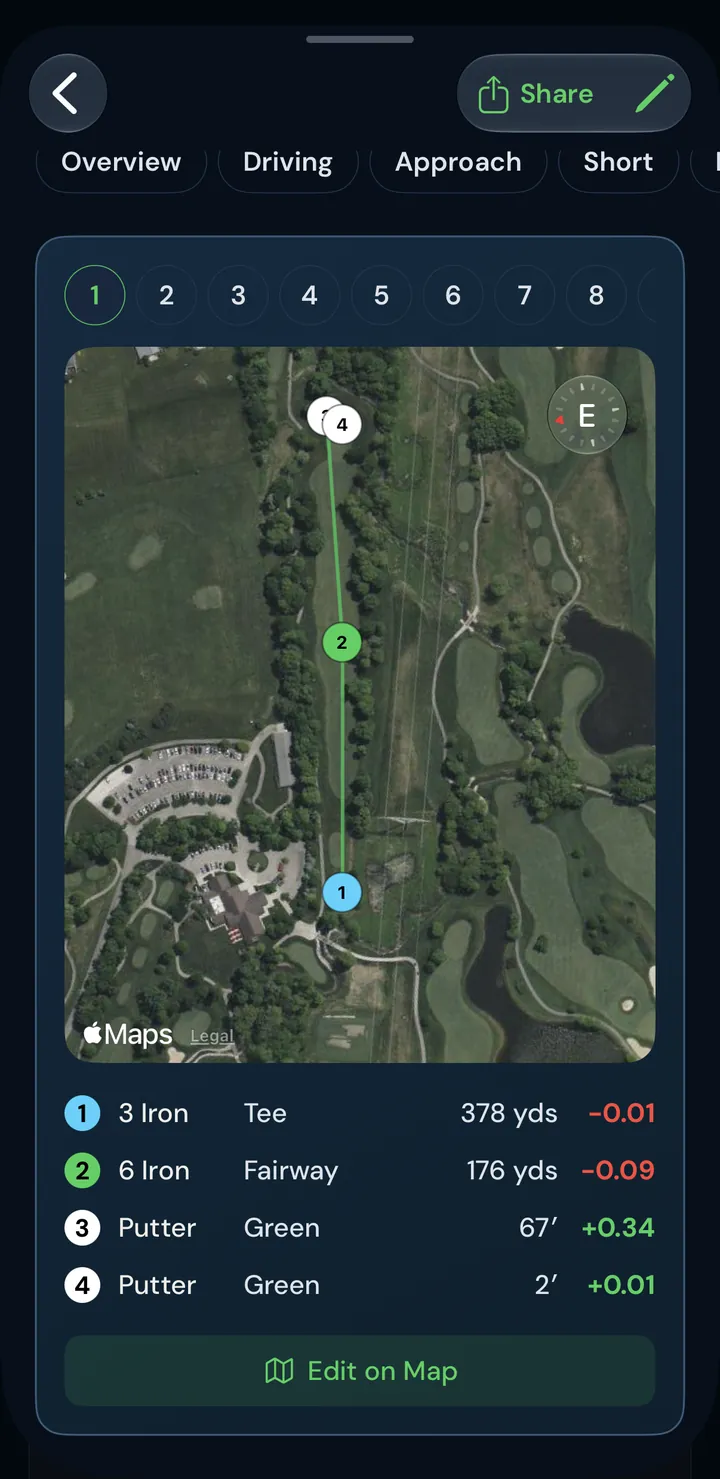
Each round gets its own strokes-gained breakdown, a hole-by-hole ledger, and a written recap that puts the blame on the right shot.

Swipe for more →
A paragraph you can read walking off 18, with the previous five rounds as context. Offline, it falls back to Apple’s on-device model.
Log a round’s shots on the map and it plays back as a full-screen story: the score reveal, the flow of the holes and the numbers, with a share button. Replay it any time from the round.
A handicap index worked out from your differentials, using each course’s rating and slope, once you have three rounds. Complete nines count too, by the 2024 WHS method. You can also enter your own.
Each shot is scored against expected-strokes tables by lie and distance (tee, fairway, rough, sand and recovery), plus a putting curve. Each shot gets one number.
On every fully logged hole, the strokes gained sums exactly to the expected score minus your actual score. No category can hide strokes from another.
Tour baselines are the published values from Mark Broadie’s Every Shot Counts, the model the PGA Tour adopted. Amateur levels are calibrated against measured shot-tracking data; plus-handicap levels are estimated between scratch and Tour. From 160 yards in the fairway, a scratch player needs 3.17 strokes on average. Beat it and you gained.
A shot logged with a strong GPS fix and a known lie counts for more than one entered from memory. Each shot’s weight reflects how it was captured.
Small samples are pulled toward zero before they’re ranked, so a three-shot blowup can’t outrank a chronic sixty-shot habit.
A leak is only called a leak when the app is at least 80% sure of it. The rest go on the watch list until the data decides.
Pressure splits wait for three rounds of each kind. A club needs 20 mapped shots before it gets a dispersion plot. An average from two swings is just noise.
Certus uses the published method but is not affiliated with or endorsed by Mark Broadie or the PGA Tour.
Every method feeds your stats; the shots are what unlock strokes gained. How to keep score →
Logged on the GPS map during the round, or placed on it afterwards. You get strokes gained on every shot, plus the club yardages, dispersion plots and shot maps that need a real position.
A scanned Certus Shot Tracker, or shots typed in hole by hole. Every shot still gets strokes gained from the lie and distance you wrote down; with no map position, it stays out of dispersion and shot maps.
The phone scorecard, Apple Watch or a scanned Certus Scorecard. Score, putts, fairways and greens feed your scoring stats and handicap. Strokes gained needs the shots, so add them on the map any time to fill it in.
Bring in sessions from Trackman, GCQuad, Mevo, Rapsodo and most others by CSV. Launch-monitor distances outrank GPS-derived ones in your yardages.
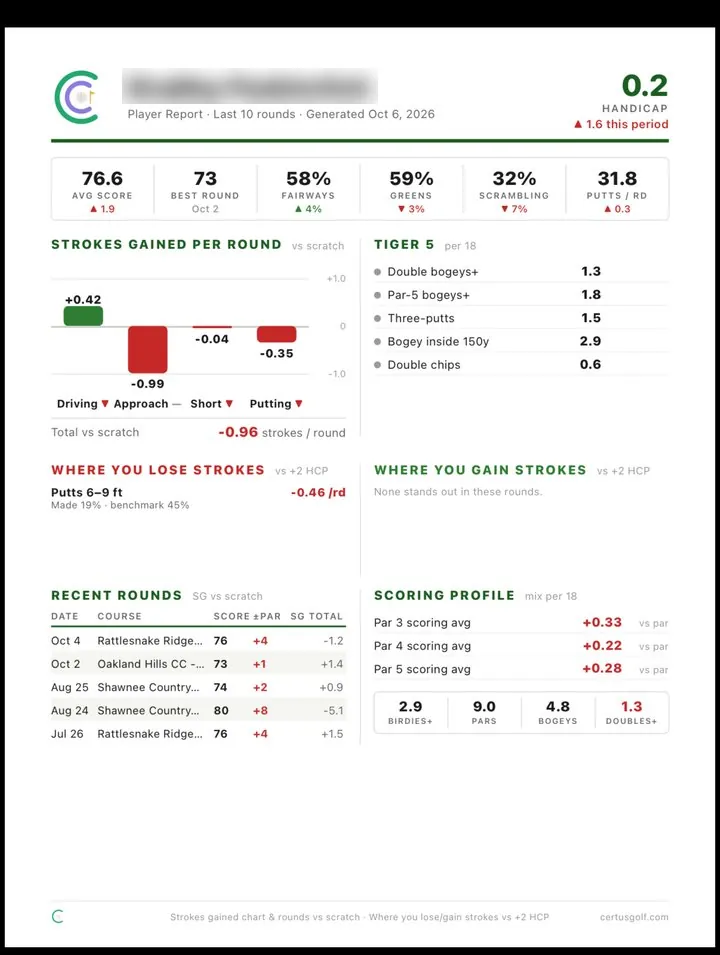
CSV of rounds, holes, every shot with its strokes gained, and journal entries, ready to open in any spreadsheet.




Swipe for more →
A rich-text journal for lessons, swing thoughts and range notes, with tags, folders and dictation. After each round, a Round Log asks for three things to work on and one that went well, and it stays attached to that round.

For iPhone, iPad and Apple Watch.